
Foundation
Document the real workflow.Build the system around it.
For teams where critical work depends on founder memory, scattered SOPs, and tools that no longer match how requests move.
Book a Free Review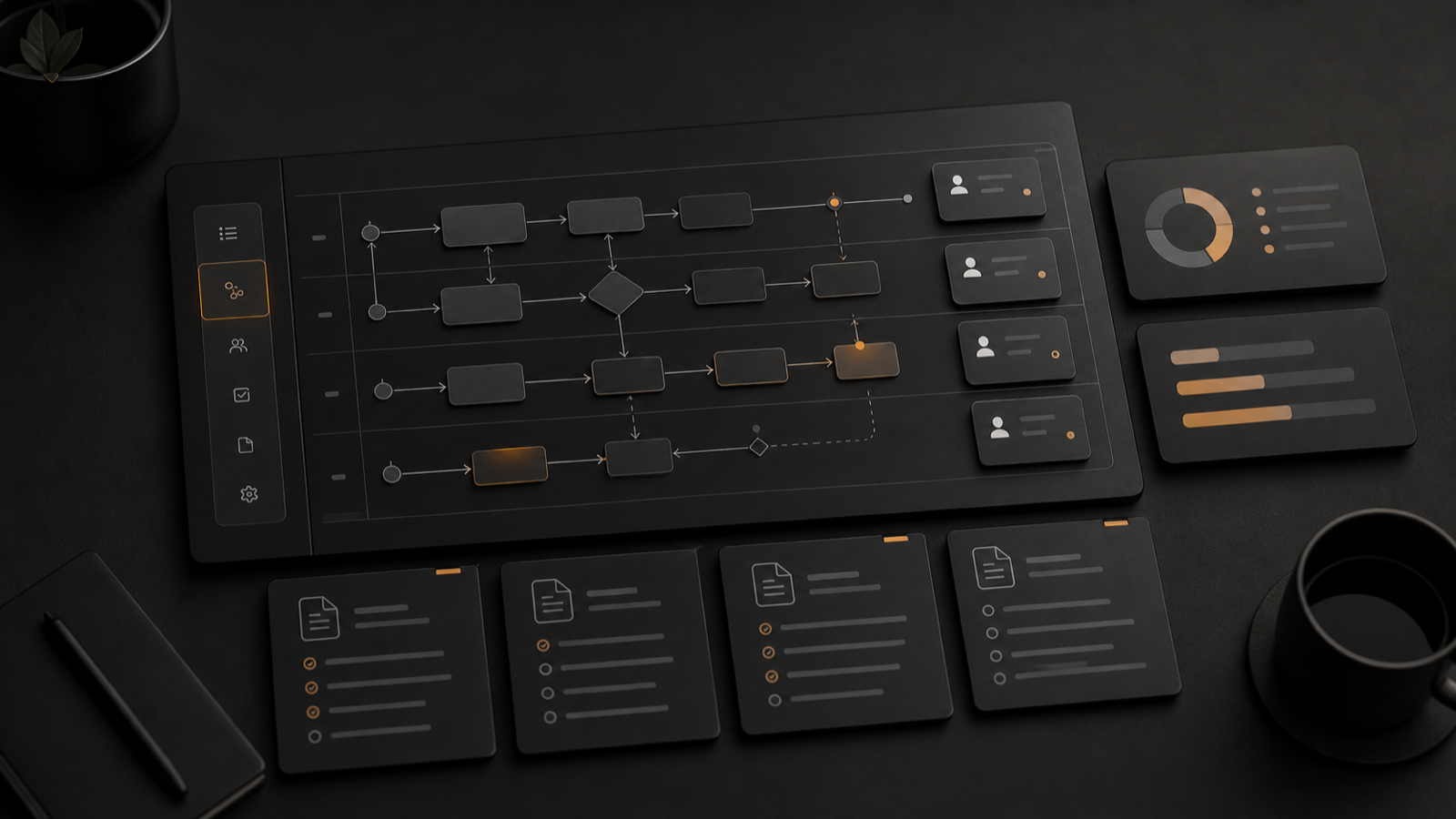
Proof of work
A working baseline your team can inspect and improve.
The output is not a slide deck. It is a working operating baseline your team can review, update, and build from.
Workflow inventory
A list of the processes in scope, their owners, related tools, and current failure points.
Operating rules
The trigger, owner, status logic, approval path, and escalation rule for each repeated workflow.
Implementation backlog
The next CRM, dashboard, automation, or documentation changes ranked by operational impact.
The Problem
Critical work cannot scale while it lives in people’s heads.
OPS Foundation is for companies that need the operating model clarified before adding more people, software, or automation.
Workflow lives in memory
Requests move through Slack, email, calls, or founder judgment instead of a visible path.
Ownership is assumed
Everyone knows the work is important, but nobody can point to the owner, deadline, or escalation rule.
Tools drift from reality
CRM stages, project boards, SOPs, and dashboards stop reflecting how work actually moves.
Documentation is hard to use
SOPs exist, but they are too long, outdated, or disconnected from the tools people use daily.
Systems
Build a maintainable operating baseline.
Process map
A clear view of how requests enter, who touches them, what decisions happen, and where work gets stuck.
Ownership model
Roles, decision rights, handoff rules, escalation paths, and the operating cadence needed to keep work moving.
System audit
A practical review of CRM, project boards, documents, dashboards, and automations against the real workflow.
Deliverables
A complete operating baseline your team can maintain.
Workflow maps
Mapped request paths, decisions, approvals, exceptions, and handoffs for the workflows in scope.
Responsibility matrix
A direct owner, backup, decision rule, and escalation path for repeated operational work.
SOP library
Short role-based playbooks written around real execution, not policy language.
Tool structure
Recommended CRM, project board, folder, and dashboard structure based on the mapped workflow.
Visibility layer
The dashboard views leadership needs to see stuck work, overdue handoffs, and open decisions.
Handover session
A working session with the team so the system has owners after Blackwing leaves.
Process
Document the operating model without weeks of meetings.
At the end, leadership can see how core work moves, who owns each step, and what needs to be built next.
Map
We interview the people doing the work, review your tools, and trace the real path from request to completion.
Define
We turn the workflow into owners, standards, decision rules, approval paths, and the minimum documentation required.
Structure
We organize the operating model into maps, SOPs, system recommendations, and visibility requirements.
Handover
We walk the team through what changed, who owns it, and what should be built or maintained next.
Questions
Questions before documenting your operating model
How long does the OPS Foundation™ engagement take?
Most engagements are completed within 4-6 weeks. For larger or more complex organizations, delivery may extend beyond this range with a clearly defined phased plan.
Do we need to buy new software?
No. We prioritize optimizing your existing tools. If changes are recommended, they are made only where structural gaps exist.
What happens after the project is completed?
Clients can continue working with Blackwing on an on-demand basis. We review the next priority, confirm scope, and start after approval.
Is this a one-time project?
Yes. OPS Foundation™ establishes your operational baseline. Ongoing support or expansion can follow if needed.
Who needs to be involved from our team?
Limited involvement from leadership is required during discovery and validation. Blackwing handles execution end to end.
Next step
Bring one workflow that keeps slipping.
We will identify whether the right next step is documentation, a focused system build, or ongoing support.